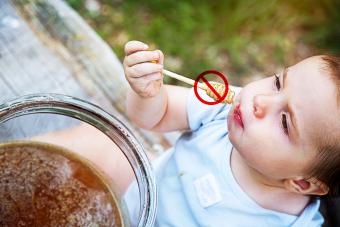
Babies should never eat honey if they are under one year of age. Honey is known to contain bacteria spores that can cause infant botulism which can make your baby seriously ill.
Why Your Baby Can't Eat Honey
If your baby is under one year old, you should avoid giving him or her any form of honey including raw, pasteurized, organic, or even honey that is coated on cereal or baked or cooked in a food product. Honey may contain spores of the Clostridium Botulinum bacteria. This bacteria is typically found in dust and dirt. While it will not harm adults or older children, it can be life-threatening to your baby. This is due to your baby's sensitive, immature digestive system which makes it very susceptible to the bacteria. A botulinum toxin can be produced by the bacteria in the baby's large intestine and develop into infant botulism.
What Are Symptoms of Infant Botulism?
Cases of infant botulism are rare. However, since infant botulism can be a life-threatening condition, you should be aware of the symptoms. They can develop over a few days or a few weeks. These symptoms include:
- Loss of appetite
- Lethargy
- Constipation
- Weak cry
- Weak muscle tone
- Loss of head control
- Difficulty sucking
- Baby appears 'floppy'
- Diminished gag reflex
- Difficulty crying
- Difficulty breathing
- Excessive drooling
- Vision problems
- Paralysis
If your baby has eaten honey and is showing any signs of botulism, you should immediately go to the emergency room.

Stick to Safer Alternatives
It is best to avoid sugar-laden snacks, but if parents really want to offer something sweet but safe, the following foods are problem-free:
- Bananas
- Fruit purees (e.g. mango, apple, peach)
- Mashed sweet potato
- Baby rice
- Baby porridge (some are flavored with natural fruit)
- Maple syrup
- Agave nectar

When Can My Baby Eat Honey?
When your baby reaches one-year-old, it is safe to feed him honey. This is due to the development of your baby's now mature digestive system over the past year. The good bacteria have been developing as well and can now help fight and prevent the botulinum spores from producing the toxin that leads to infant botulism.
How to Introduce Honey to Your One Year Old Baby
The best way to introduce honey to your baby is to do it slowly. You should also be cautious and watch for any possible reactions. The following are a few ways to introduce your baby to honey:
- Mix honey into oatmeal or yogurt.
- Pour honey on pancakes or waffles.
- Spread honey on toast or a bagel.
Benefits of Honey
Once your baby is old enough to eat honey, it will provide many health benefits which include:
- It is a good source of vitamins and minerals.
- It contains antioxidants.
- Is a good source of energy.
- Soothes irritated throats.
- Suppresses coughs.
- Has antibacterial properties and can be applied topically to wounds.
Never Take Risks
You should never take risks when introducing unfamiliar foods to a baby. If you are ever unsure, the safest thing to do is consult your pediatrician prior to feeding any new foods to your baby.